DRAG

Architecture Tour

  • Home
  • Architecture Tour
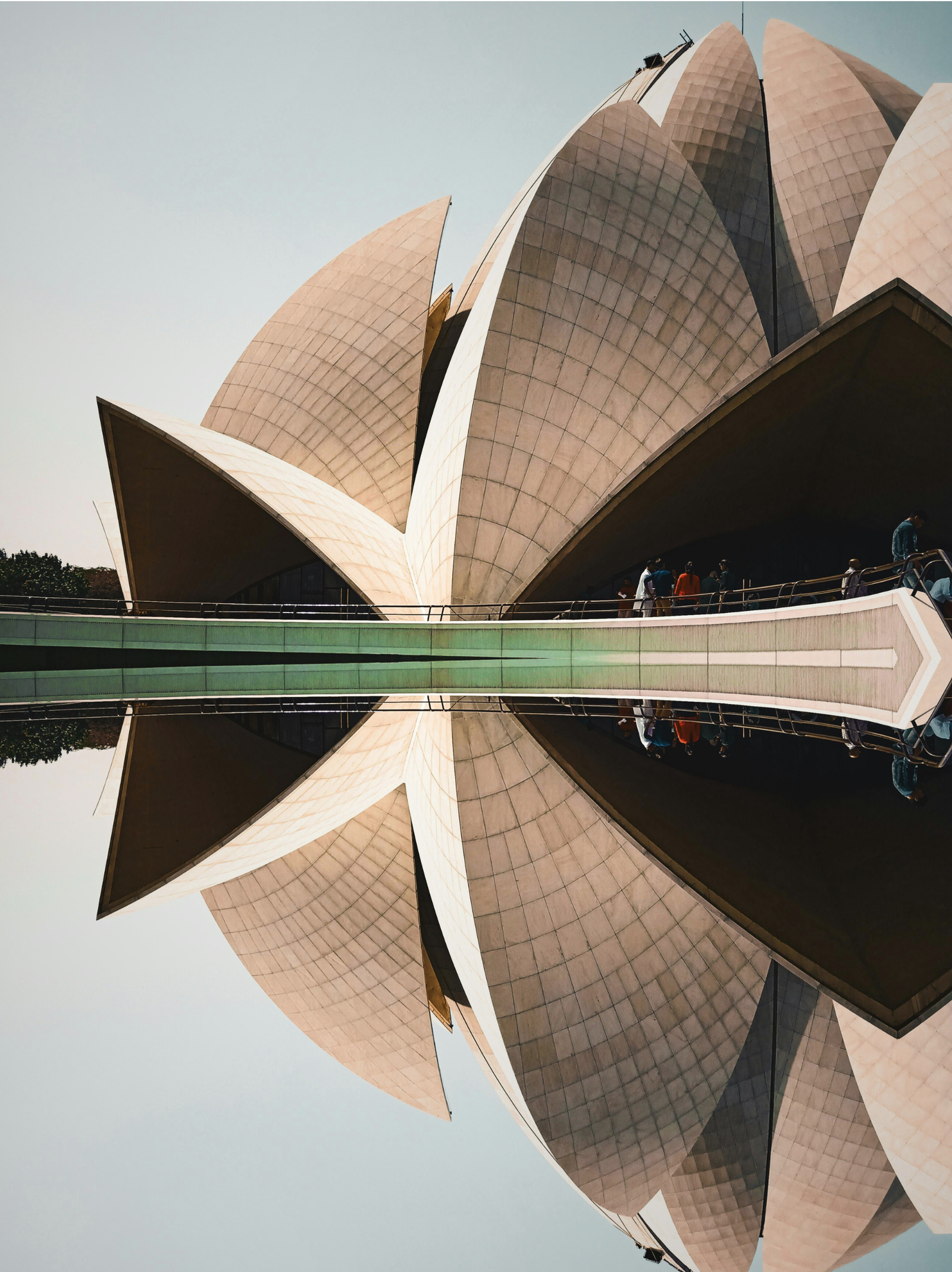
Side view of Lotus Temple in New Delhi, showcasing the concrete petals that lend the building the appearance of the flower it is named after
This is not a tour.

It’s a designed experience

We take you on a trail of some of the most distinguished buildings of the 20th Century, cherry picked with the help of noted heritage experts, tracing the blueprint that makes up modern India. Be prepared for an unmatched experience of India’s Art Deco and Modernism, as we visit buildings such as the Indian Habitat Centre, Palika Kendra, NDMC, Shri Ram Centre for Art and Culture, Capitol Complex, NCPA and at least 40 other buildings, across four main locations. 

While many spend a lifetime in such discovery and study, this tour of a fortnight is aimed at giving you a deeply immersive experience of the Art Deco and Modernism shaping India.

Unlike the western experience of modernism, which is more bound with expanding urbanisation and the drive for progress, India’s architectural development throughout the 20th Century is a story of colonial expression, emancipation, and ultimately, the assertion of a national identity.

This tour will chart this phenomenal shift and give you an insight into how architects fused the rich traditions of the past with the wider global architectures of the modern movement to create buildings that embodied the spirit of an emergent, free India.

From the colonial grandeur of New Delhi, to the monumental scale of Chandigarh and the little known elegance of Mumbai and Hyderabad’s Art Deco heritage, this tour is a new way to look at India’s recent past, which will surprise, delight and inspire.

Shape Image
Architecture Locations

Where We're Heading

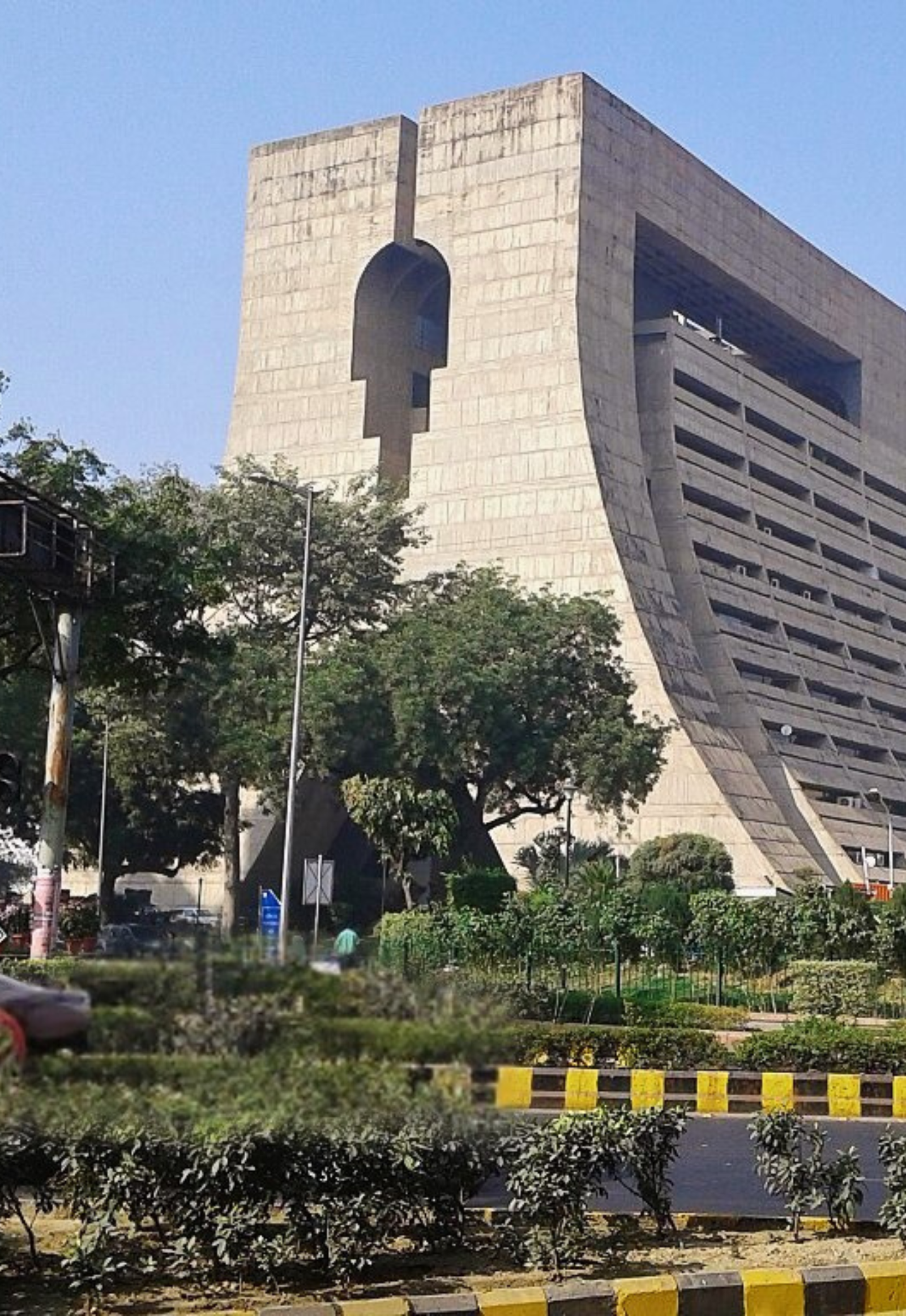
View of the India Government's Ministry of Home Affairs building in Delhi | WikiCommons

DELHI

In Delhi, we will have an in-depth exploration of the works of both Sir Edwin Lutyens and Sir Herbert Baker, the two British architects responsible for the construction of the city as Britain's new imperial capital of India (taking over from Calcutta/Kolkata), from 1912 to 1931. Their grand plan of an imperial city of processional avenues, axial alignments and monumental buildings continues to define Delhi’s identity today. We then trace the city’s post-independence evolution, from early modernist icons to institutional and cultural landmarks. Delhi makes for a striking lens into the evolution of India’s architectural ambitions, layered atop a city that has been rebuilt from the ashes multiple times across centuries.
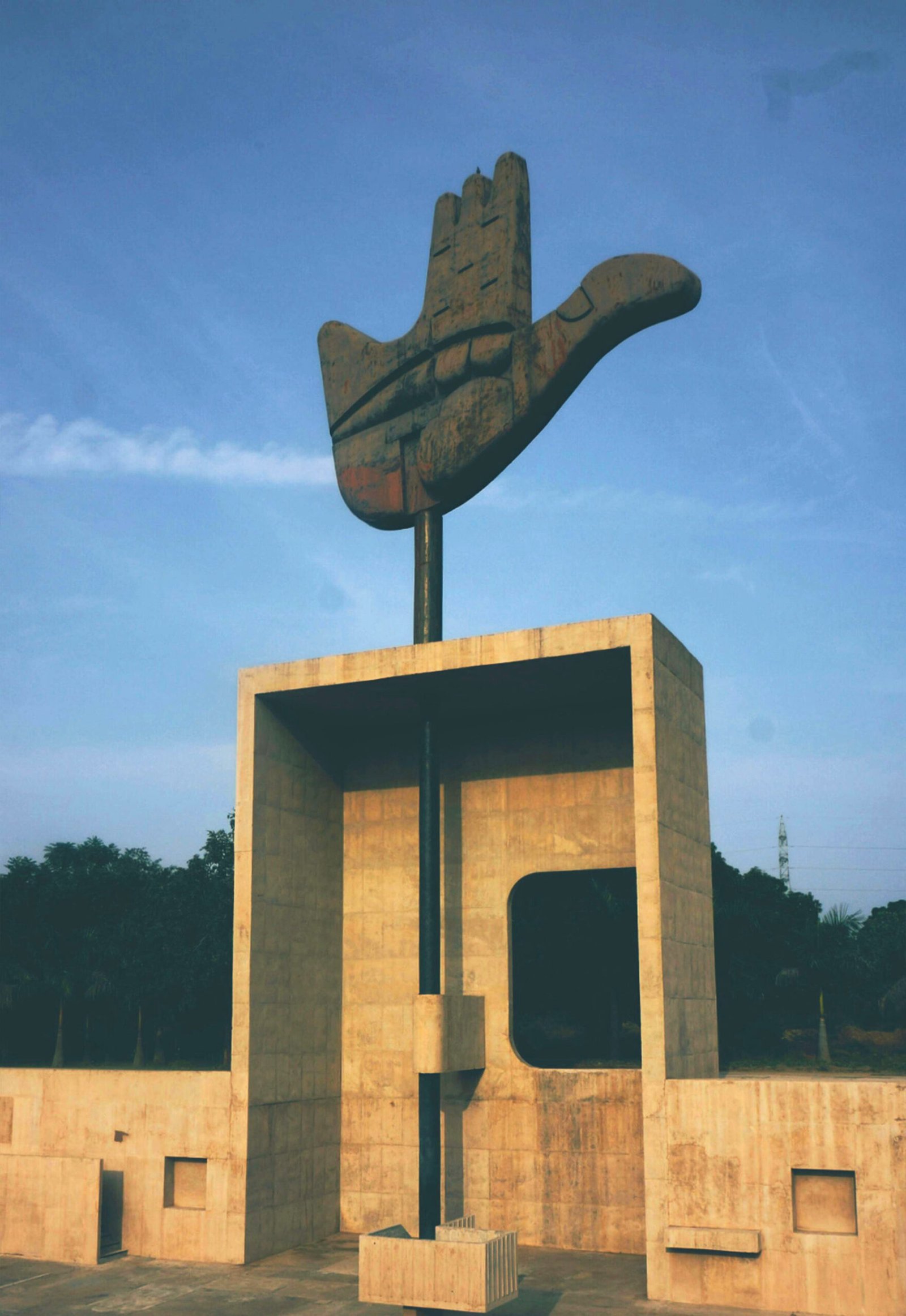
Hand of Le Corbusier scaled

CHANDIGARH

From pre-independence, we move into post-independence with Chandigarh. India’s first planned city after 1947, Chandigarh is often seen as Le Corbusier’s magnum opus – an audacious vision of modernity. Interestingly, Corbusier initially had to be cajoled into joining the team, and visited India for only one or two months a year. His Capitol Complex is inarguably the centrepiece, but the city was shaped equally by Pierre Jeanneret, Jane Drew, Maxwell Fry, and the many Indian architects who worked with them. Together, they created not just iconic monuments but an entire civic landscape — residential sectors, institutions, and public spaces — that reflect a unique synthesis of modernist ideals and Indian context.
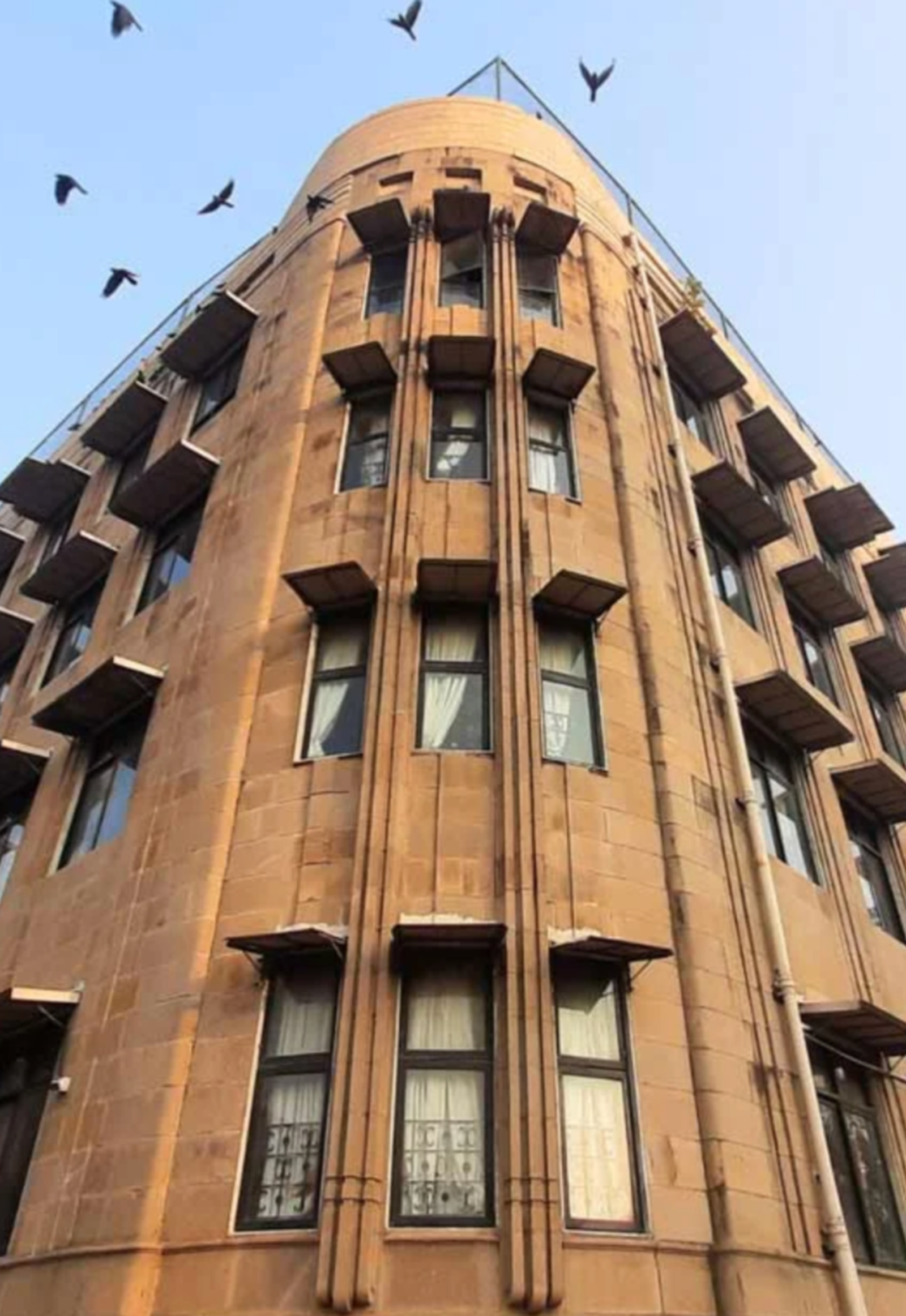
A front view of SKI Jain High School at Marine Lines in Mumbai. The architecture belongs to the 20th Century design style called Art Deco | Art Deco Mumbai

MUMBAI

Mumbai, a prosperous and expanding port in the 1930s, is home to The Indian Institute of Architects, founded in 1929. The Art Deco buildings of Mumbai were officially recognised as a World Heritage site by UNESCO in 2018. Many of the buildings were designed by local architects. Decorated with motifs drawn from tropical vegetation, stylised waves, and sunburst rays, the ensemble rivals (some would say exceeds) Miami. We have partnered with 'ART DECO MUMBAI', a nonprofit trust dedicated to preserving the city's architectural heritage, who will take us around the best of Mumbai's Art Deco locations. We will also see iconic structures such as the Gateway of India, built to commemorate the visit of King George V in 1911.
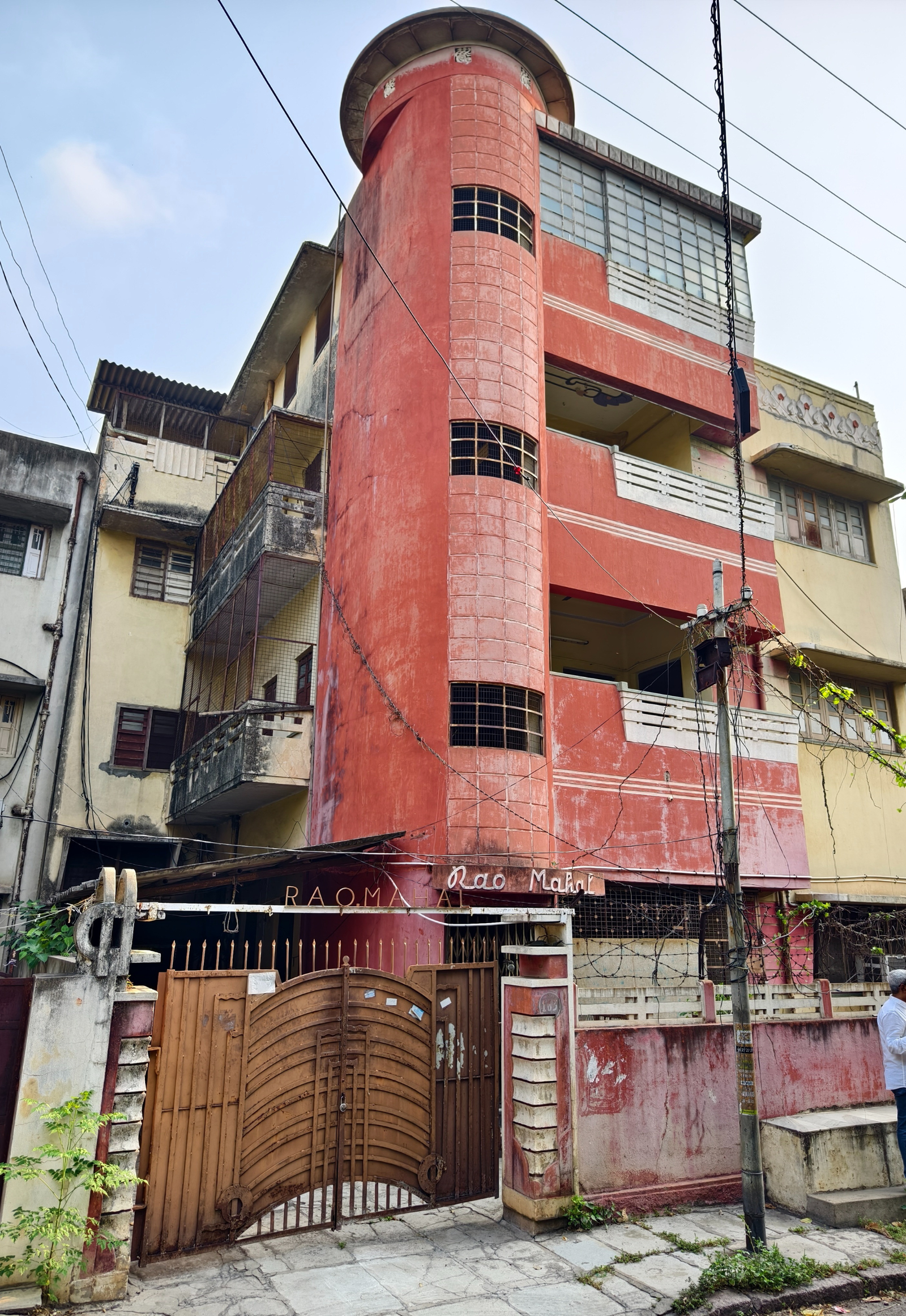
View of a residential buildings in Hyderabad | Yunus Lasania, The Hyderabad History Project

HYDERABAD

Once the seat of the powerful Nizams, Hyderabad is a true cultural crossroads, where Indo-Islamic grandeur, understated mid-century modernism, and a celebrated culinary tradition layer over each other — much like the biryani the city is famous for. When it comes to architecture, Hyderabad reveals an evolving design story shaped by royal patronage, climate, craft, and cosmopolitan influences. From the Qutb Shahi tombs and Chowmahalla Palace to modest homes in residential areas such as Jeera Colony, the city carries a rare architectural continuity. You'll find Art Deco quietly embedded within residential neighbourhoods, expressed through geometric restraint and locally adapted motifs.
Tour Details

Itinerary

Delhi

22 Feb – 25 Feb | 4 Days – 4 Nights

The journey begins in India’s capital, Delhi, where architecture has long been used as a statement of power, identity, and vision. Please plan to arrive by noon on 22 February (Sunday), where you will be received at the airport and transferred by private coach to the hotel for check-in and lunch. That evening, we will head out and begin exploring the heart of Delhi, colloquially dubbed Lutyens’ Delhi.
Over the next three days, we will trace the evolution of India’s architectural design and identity, from Edwin Lutyens and Herbert Baker’s grand master plan through to India’s post-independence modernists such as Charles Correa, Raj Rewal, Joseph Allen Stein, Shiv Nath Prasad and Kuldip Singh.
Expect to be on your feet for most of the days in Delhi. Our tour will include visits to the Rashtrapati Bhavan, formerly the Viceroy’s House, and the heritage block – where, on special permission, it will be possible to view letters, original drawings and furniture of Lutyens and Baker.
We will also visit parts of central Delhi with its colonial government bungalows, ‘Steinabad’ where the Indian Habitat Centre and India International Centre are located, and and a wide range of other modernist and civic buildings such as the Old Parliament House, Triveni Kala Sangam, Shriram Centre for Performing Arts and St. Martin’s Church.
You will also see iconic locations like Rajpath (now officially Kartavya Path), India Gate, Humayun’s Tomb, Gurdwara Bangla Sahib, Hauz Khas and Khan Market – places that have shaped, and been shaped by, the city’s identity over time.
An evening will be spent in conversation with Catherine Croft, whose expertise in conserving 20th-Century architecture in the UK, through The Twentieth Century Society, will serve as a bridge between your familiar context and present-day India.
On 26 February (Thursday), we will board a premium superfast train to Chandigarh, the next stop on the tour.

Chandigarh

26 Feb – 1 Mar | 4 Days – 3 Nights

We will arrive in Chandigarh by afternoon. After checking in and lunch, we will step out in the evening for a walk around Sukhna Lake and the Lake Rest House, both designed by Le Corbusier – the master planner of Chandigarh.
On 27 February (Friday), the first full day in Chandigarh, we will head straight to the pièce de résistance, the Capitol Complex, a designated UNESCO World Heritage Site. Within the complex, you will find the Secretariat, High Court, and Legislative Assembly, as well as monuments such as the Open Hand Monument, Geometric Hill, the Tower of Shadows, and Martyr’s Memorial. This day is dedicated to exploring the complex, giving you time not only to explore but to return, observe, sketch, and reflect.
Over the following two days, we will do walking tours of Sector 10 and Sector 22 – as a way to experience the plan of Chandigarh, and the homes of Le Corbusier and his cousin Pierre Jeanneret, who was the chief architect of Chandigarh and responsible for executing Corbusier’s master plan. We will also visit the Museum Complex, Kalagram (a crafts village), and the Rock Garden.
On 1 March (Sunday), we will fly to Mumbai, arriving by evening.

Mumbai

2 Mar – 4 Mar | 3 Days – 3 Nights

In Mumbai, our gaze will shift to Art Deco architecture. We will go on two walking tours hosted by Art Deco Mumbai, a non-profit founded by Atul Kumar that works towards conservation and promotion of Art Deco in the city.
One tour is of Marine Drive – also known as the Queen’s Necklace – covering a stretch of 35 sea-facing Art Deco buildings. Lasting approximately 100 minutes, this tour will explore the history of this cosmopolitan neighbourhood and how it emerged as a symbol of Mumbai’s modern identity.
The other tour is of Matunga, the city’s first planned suburban development that afforded an unparalleled quality of life to its residents, complete with modern apartments, open spaces, tree-lined avenues, hospitals, tram connectivity, schools, and even a cinema. The foresight in this urban plan is reflective of a vision of Bombay’s life and cosmopolitan ways (that endures to this day). This tour will last approximately 120 minutes.
As we move through the city, you will also come upon other must-see heritage structures such as the Gateway of India (built to commemorate the visit of King George V), Esplanade Mansion (often cited as India’s oldest surviving cast-iron building), Regal Cinema (an Art Deco theatre), and Oval Maidan (part of the UNESCO-listed Victorian Gothic and Art Deco Ensembles of Mumbai).
One evening is reserved for an informal conversation with Atul Kumar over drinks, giving an opportunity to reflect, discuss and connect the threads of the journey so far.
On 4 March (Wednesday), which is a national holiday, we will depart from Mumbai in the morning for a short, scenic retreat to the nearby wine district of Nashik. Travel time is approximately 5 hours by road.

Nashik

4 Mar – 5 Mar | 1 Day – 1 Night

This day is a national holiday to mark Holi, the hugely popular festival of colours. We will spend Holi in Nashik, set within the gentle folds of the Western Ghats with rolling vineyards and open skies. Cool air, basalt hills, and wide horizons will replace skylines marked by brick, concrete, and glass. Consider it a moment of stillness and reset.
Nashik is located approximately 165 km (100 miles) from Mumbai and is the epicentre of India’s modern wine movement. Among the vineyards that define this landscape, we will taste wines from two standouts.
The first is Sula, India’s most celebrated wine house with a design-forward, resort-style estate – where we will arrive by lunchtime and also stay the night. The second is Vallonné, a boutique vineyard known for its French-led, small-batch winemaking approach and deliberate, landscape-responsive architectural philosophy.
As part of the tour, you will also experience the festival of Holi, with music, herbal organic colours, and curated pours in an elegant and safe setting. In Nashik, you will discover an India beyond its modernist architectural expression, through its vivid terroir and colours.
Well-rested, we leave on 5 March (Thursday) by flight to Hyderabad for the last leg of our tour.

Hyderabad

5 Mar – 8 Mar | 3 Days – 3 Nights

We land in Hyderabad, the erstwhile capital of the Nizams, and will check in and settle into the hotel by late afternoon. In the evening, we will visit the British Residency, now part of Osmania University’s Women’s College.
The last leg of our tour will continue the thread of Art Deco, but will also showcase how multicultural India encapsulates its varied histories, cultures, and architectures. Hyderabad, well known for its biriyani, will serve on a platter this unique layering – a cityscape shaped by Nizam-era Indo-Saracenic and European influences.
During the day, we will go on two walking tours hosted by The Hyderabad History Project, each approximately 180 minutes in duration.
In the first, we will walk through residential neighbourhoods that sprung up in the British cantonment area of Secunderabad, where wealthy and well-travelled business people brought home the trend of Art Deco and incorporated the style in their bungalows.
In the second, we will walk around Koti, Abids, and Sultan Bazar, the old centres of government and business, where Art Deco is evidently reflected in the general public consciousness – government-commissioned buildings, offices and even a religious centre (the Arya Samaj temple).
We will also visit the Qutb Shahi Tombs, an Indo-Islamic dynastic necropolis recognised by the UNESCO Heritage Convention (not yet inscribed as a World Heritage Site). They are iconic for their survival and enduring architectural importance.
In the evenings, we will experience some of the Nizami culture through high tea at a 105-year-old heritage home, and a four-course dinner (without alcohol) at a 126-year-old heritage home. These culinary experiences, along with the heritage visits, have been curated for the tour to exemplify the cultural subtext of India’s modern architecture story.
We will also have another conversation session with Catherine Croft, bookending the tour and the story of India’s 20th-Century architectural blossoming.
We conclude the tour on 8 March (Sunday) in Hyderabad, from where you can directly fly out of India. If you need a connecting flight to Delhi to board your return flight, or an additional night’s stay in the hotel, we will assist with that.

Behind the Tour

Meet the Tour Experience Leaders

Jon Wright

Architectural Historian and C20 Heritage Consultant

Jon Wright will be your main architectural guide. 
Jon is a heritage consultant and expert tour guide based in London, specialising in the history and conservation of 20th-century buildings. He works as a 20th-century heritage consultant with Purcell Architecture Ltd, the world’s largest conservation architecture practice.
As a guide, Jon has led groups across London, France, Hungary, India, and the U.S., and mentors new guides through Open City London’s Golden Key Academy. His acclaimed tour on Modernism and Postmodernism is now in its ninth year.
Deeply passionate about Indian modernism for over a decade, Jon co-led the Twentieth Century Society’s India tour in 2019. Enthusiastic and inclusive, he encourages discussion and ensures every participant gains both context and appreciation for the buildings they visit.
On this tour, Jon will be your constant thread, offering commentary and connecting you with the best expert speakers along the way.

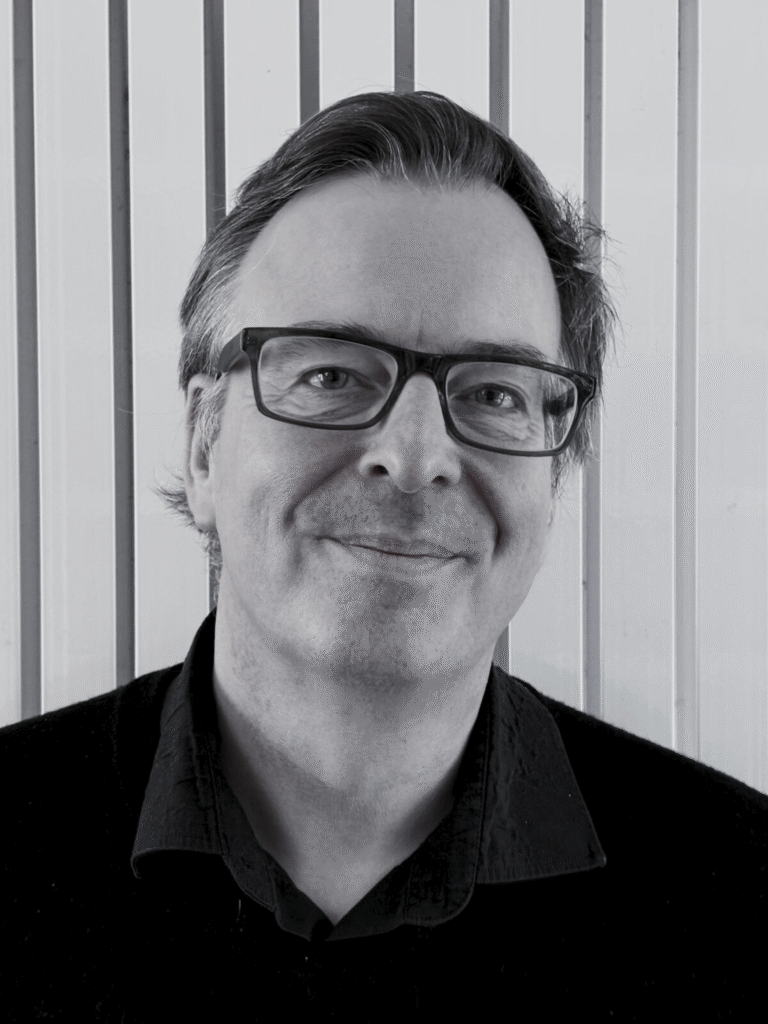
Phot of a man looking at the camera. His name is Imran Khan, and he is an Indian Travel and Culture Expert, Tour Designer and Organiser

Imran Khan

Indian Travel and Culture Expert, Tour Designer and Organiser

Imran Khan will be the co-lead and cultural guide on this tour.
Imran is an experienced tour curator and trained naturalist based in Delhi, with over a decade of experience leading inquisitive travellers through India’s bustling cities, villages and forests in the heartland, and everything in between. His expertise lies in interpreting the country’s rich intersections, where history meets politics, and culture meets the natural world.
Born and raised in India, he has a deep understanding (and love) for the many politico-cultural threads that make the Indian weave. He has a tale for nearly every lane and landscape, whether in the heart of Old Delhi or deep inside a tiger reserve.
As a naturalist, Imran brings a unique lens to the tour, offering insight into how India’s evolving landscape continues to shape its buildings, its people, its culture, and its wildlife.
On this journey, Imran will provide cultural context and contemporary perspective, enriching the experience with his knowledge of India’s diverse and dynamic urban pulse.

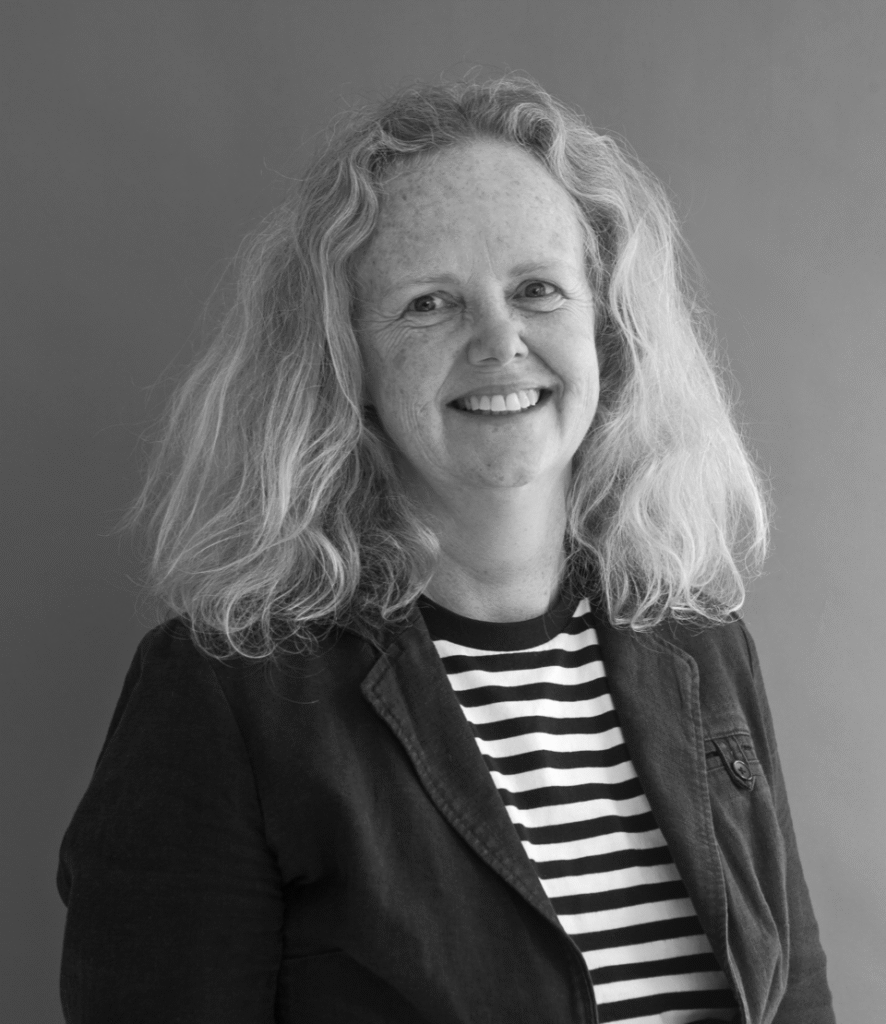
Black and white photograph of a woman looking towards the camera. Her name is Catherine Croft, and she is an Architectural Historian and 20th Century Architecture Conservation Expert

Catherine Croft

Architectural Historian and C20 Conservation Expert

Catherine Croft will be your expert on 20th Century architecture.
Catherine has been director of the C20 Society (the national organisation campaigning for the conservation of post-1914 heritage in the UK) for over 20 years. An authority on architectural conservation, Catherine has led and supported numerous study tours across the UK and abroad, including a memorable visit to India where she had the opportunity to meet B.V. Doshi.
Her professional background includes work as a historic buildings adviser for both English Heritage and the Theatres Trust.
Catherine writes and lectures extensively on architecture and conservation, and is the editor of the C20 Magazine, as well as a contributor to The Burlington Magazine.
On this tour, Catherine will bring her deep expertise and passion for modern and postmodern architecture, illuminating the stories behind the buildings and the movements that shaped them.

Behind the Tour

Practicalities

1. Cost Inclusions
1.1 Accommodation
  • Five-star hotels and boutique properties at all locations for 14 nights
  • Twin sharing rooms
1.2 Transport
  • Luxury private coaches
  • Airport–hotel transfers
  • Domestic air travel within India
  • First-Class / Executive-Class train reservations within India
1.3 Meals
  • Breakfast only at all hotels
1.4 Tour Expertise
  • Tour leaders
  • Tour specialists, including local experts
  • Informal talk by Atul Kumar, Founder-Trustee of Art Deco Mumbai (with drinks)
  • Local guides
1.5 Curated Experiences
  • Nizam-themed high tea at a century-old heritage home
  • Four-course Nizam-themed dinner at a late-1900s heritage home
  • Wine tour at Sula Vineyards, Nashik
  • Holi celebration in Nashik
1.6 Admissions / Entry
  • Museums and buildings listed in the itinerary
  • Art Deco walking tours in Mumbai listed in the itinerary
  • Art Deco walking tours in Hyderabad listed in the itinerary
2. Cost Exclusions
  • International flights to and from India
  • Indian visa
  • Single room occupancy (will be provided on request at extra cost)
  • Meals and drinks other than those specified in inclusions
  • Discretionary expenses (shopping, medicines, laundry, minibar, room service, etc.)
  • Tips for service providers (optional tipping kitty available)
3. Physical Readiness
  • The tour requires a medium-level of fitness as it is a packed itinerary for 15 days
  • You will walk around buildings and within building complexes
  • You will participate in multiple guided walking tours, each averaging about 100 minutes in duration
  • You must be able to maintain a steady pace without slowing the group
4. Travel Advice
  • Please check your country’s travel advisory for India before booking
  • Once booked, you will receive a detailed guide covering cultural etiquette, packing suggestions, footwear and clothing advice
  • Additional support is available for extra hotel nights before/after the tour, and connecting domestic flights within India
Book Your Spot

Interested in the Tour? Send Us a Message

Let us know if you're ready to embark on a highly-curated, luxury tour of India's Art Deco and Modernism, discovering some of the finest buildings of 20th Century in the country. You may use the same form to indicate whether you'd like to join the Feb-Mar 2026 tour or the next edition

Shape Image
Shape Image
Shape Image
Shall We Travel will handle the primary logistics on this tour, including:
  • Domestic Air Travel within India
  • Five-star Hotel Accommodations
  • Chauffeured Vehicles
  • Airport-hotel Transfers
  • Entry tickets / viewing permits for buildings, museums, etc
  • Liaisoning with local experts
  • Cultural group experiences
Cost: £6950 per head*

* Terms & Conditions Apply